Article

Introducing the Ypsi SNAP Gap

October 31, 2025

Beloved community,


There’s a phrase I keep returning to:

We are the safety net.


With the federal government shutdown now halting SNAP (Supplemental Nutrition Assistance Program) benefits across Michigan, that phrase feels less like a metaphor and more like a mandate.


Beginning November 1st, thousands of Washtenaw County households, nearly 9% of local families, will lose access to the benefits that help them keep food on the table. These aren’t strangers. It’s our neighbors. It’s our friends. It’s the families who fill our markets, who grow alongside us, who deserve far more than the uncertainty this system has handed them.


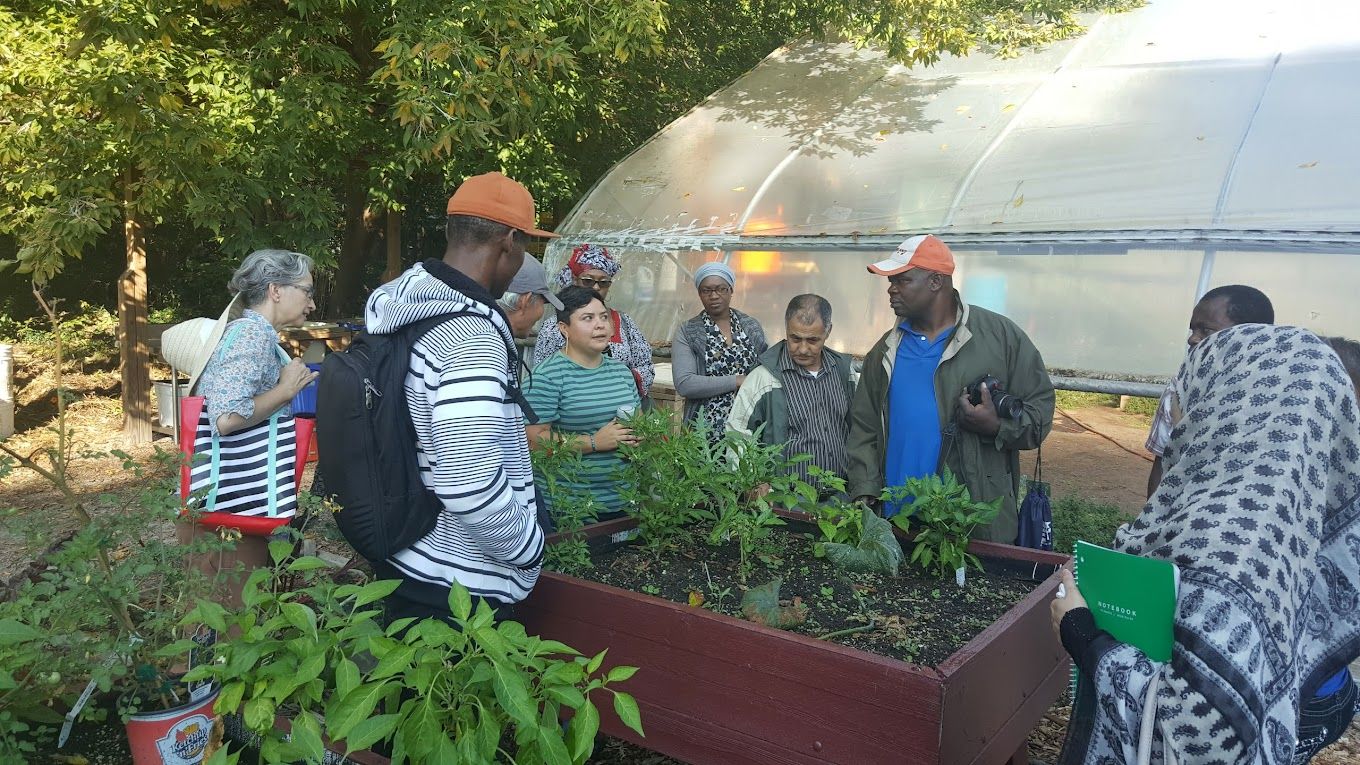
At Growing Hope, we’ve always believed that food sovereignty runs deeper than access. It means dignity, interdependence, and self-determination. When the systems built to care for people fail, our community steps forward to weave that net ourselves.


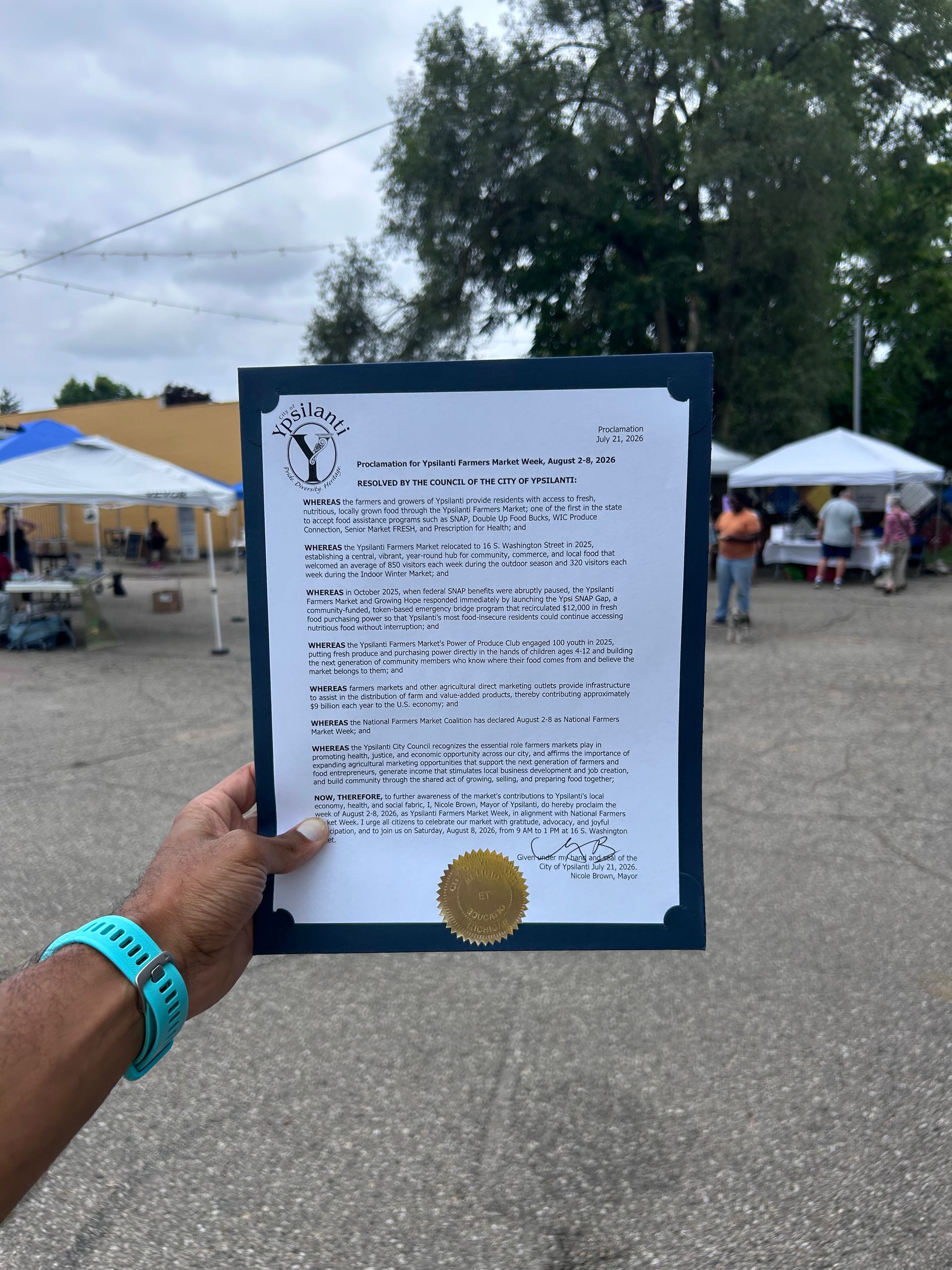
To ensure that no one goes hungry during this crisis, we’re launching a new local initiative: the Ypsi Market SNAP Gap.


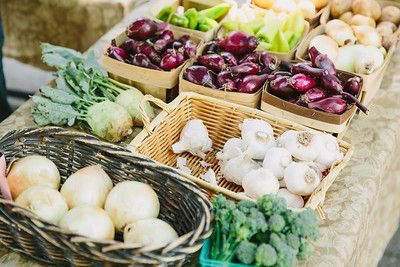
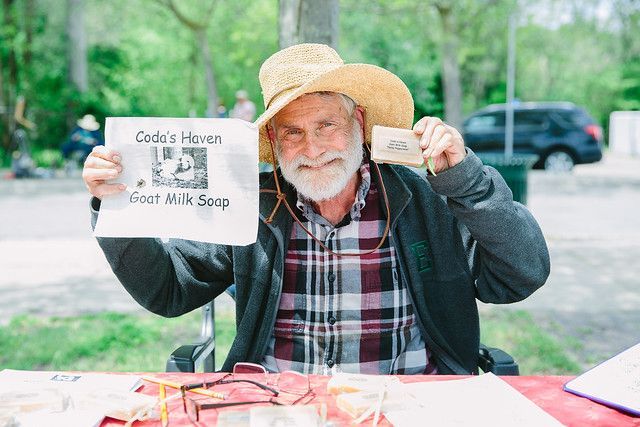
This community-based program temporarily replaces or supplements SNAP for anyone who uses an EBT/Bridge Card. At the Ypsilanti Farmers Market, participants can receive $40 in market tokens to spend on any fresh or prepared foods.


Simply bring your Bridge Card to the Market Info Booth and shop with dignity from local farmers and producers who nourish our community every week.


We will not allow our neighbors to go hungry while food surrounds us.


This program keeps local food moving through local hands, strengthening both Ypsi families and Ypsi farmers. With a mix of foundation, corporate, and individual support, this is mutual aid in motion.


Folks are in need, and our community is stepping up in some incredible ways. Here are just a few, and some ways you can get involved:

1. Double Up Food Bucks has temporarily lifted its cap, allowing unlimited matches for Michigan-grown produce for anyone still receiving SNAP benefits, while also offering limited $40 vouchers.


2. Food Gatherers is expanding pantry hours and sites across the county.


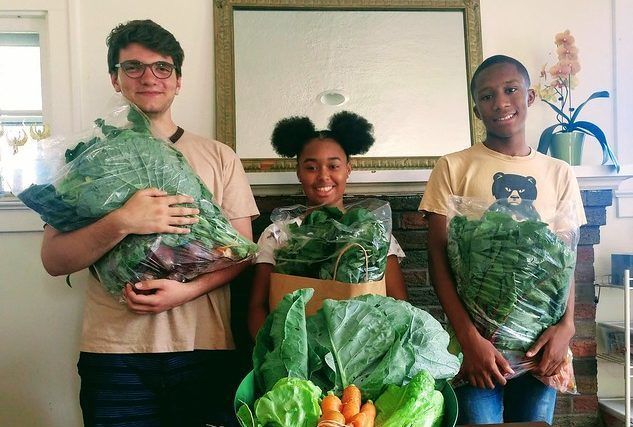
3. Our Free Produce Stand at the Growing Hope Urban Farm remains open, stocked by community members and local growers who share what they can. No one will be turned away. If you have extra harvest from your garden, we invite you to share it directly with your neighbors.


It’s not about waiting for systems to restart; it’s about creating systems rooted in care, justice, and belonging.


Each Ypsi Market SNAP Gap token moves through our local food economy twice: once when it nourishes a family, and again when it supports the farmer who grew it. This is how we resist scarcity: by practicing abundance.


We raised emergency funds earlier this year to prepare for moments like this, and they are already hard at work. But as need grows, so too must our response. Our community is what makes this pivotal movement work possible; thank you for being part of our community.


“The land and the people are meant to take care of each other.” -Leah Penniman


That’s what we’re doing now. Through shared harvests, through small acts of generosity, through the quiet conviction that no one should go hungry.


In this moment of uncertainty, we’ll keep doing what we’ve always done: growing hope, together.


In solidarity and care,


Julius


P.S. Shop the market, contribute to our Free Produce Stand, or share this with a neighbor who could use a helping hand; together, we keep our community fed and supported.

share this

Related Articles

Related Articles
By Julius Buzzard February 26, 2026
Beloved community, March is National Nutrition Month, and across the country, we’re told to read labels more closely, count nutrients more carefully, and “eat real foods.” But nutrition is not a trend cycle; it is a question of power. I invite you to join me in curiosity and ask: Who has access to what’s being recommended? Who can afford the “real” food being celebrated? Who grows it, and who gets paid? Are we treating illness, or are we transforming the conditions that produce it? Health outcomes matter, but health equity goes further. Health equity asks why certain neighborhoods have higher rates of diabetes in the first place. It asks why fresh food feels exceptional in some zip codes and ordinary in others. It asks why farmers struggle to survive while healthcare systems expand. If we do not address land access, procurement policy, and economic extraction, then “eat real” risks becoming a quiet moral judgment instead of a structural commitment. Michigan once modeled real structural commitment through 10 Cents a Meal for Michigan's Kids & Farms ; matching school dollars to buy Michigan-grown produce and making local food standard in cafeterias. It strengthened children’s health, stabilized farmers, and shifted institutional purchasing habits. This year, the program was not funded. And as a result, students miss the chance to build lifelong food memories rooted close to home. And still, we are not retreating. Together, we are building a foundation of generational health. Generational health is the long game. It is the work of ensuring that today’s third grader doesn’t just eat a fresh apple; but grows up expecting apples from Michigan orchards in their cafeteria. It is ensuring that a teen doesn’t just volunteer at the market; but understands zoning laws, farm bills, and supply chains well enough to challenge them. This is the foundation of our theory of change. We build generational health by shaping habits early and reinforcing them often; through initiatives like our Teen Leadership Program, where young people gain the skills and critical lens to navigate and influence the food system; through field trips to our urban farm and incubator kitchen, where learning is rooted in soil; through Farm to School programming that normalizes local procurement; and through Power of Produce (POP) Club, where children practice agency by choosing fresh food for themselves. This is how we shift from reactive nutrition work to regenerative nutrition culture. We do this by pairing conversations about Food as Medicine, dietary guidelines, and eating real foods, with: An insistence that farmers are part of the prescription. Guidelines that align with affordability and access. Understanding that real foods need to be reachable, culturally meaningful, and dignified. Nutrition is not simply about what’s on a plate. It is about who has the right to thrive. This National Nutrition Month, I invite you to see nutrition not as an individual burden, but as a collective project that treats fresh food not as charity, but as infrastructure. We are cultivating a community where children expect fresh produce, where farmers are stable and respected, and where health is inherited as legacy. That is generational health. And that is the future we are growing together. In solidarity, Julius P.S. Check out the FoodCorps Policy Action Map or sign up for our Farm to School Newsletter if you’re interested in building generational health.
By Julius Buzzard February 25, 2026
Long before reparations entered mainstream conversation, Queen Mother Audley Moore was clear: justice required land, resources, and self-determination; not symbolic gestures. A descendant of enslaved people, Moore spent decades organizing for reparations rooted in material reality. She understood that stolen labor was tied to stolen land, and that food insecurity was not accidental; it was engineered . Moore advocated for land redistribution, cooperative economics, and community-controlled food systems as necessary steps toward repair. Her vision aligns directly with modern food sovereignty movements: returning control of food, land, and labor to the people most harmed by their removal . This is not history; it is instruction. Growing Hope’s work exists within this continuum. From urban farming to food hubs, from youth leadership to market access, we are building the kinds of systems Moore demanded, systems that repair harm by restoring agency. Food sovereignty is reparations in practice. And the work is unfinished. 
By Julius Buzzard February 18, 2026
During the Montgomery Bus Boycott, when formal fundraising was surveilled and criminalized, Georgia Gilmore organized something deceptively simple: a kitchen network . Known as The Club From Nowhere , Gilmore and other Black women sold pies, cakes, and home-cooked meals to quietly raise money for the movement. Their anonymity was protection. Their food was infrastructure. For over a year, as the boycott stretched on, these funds paid for carpools, gas, and daily survival. While history often centers on speeches and marches, Gilmore reminds us that revolutions are sustained behind the scenes by those who feed people, organize logistics, and keep the lights on. Her kitchen was a site of resistance. Her recipes were tools of liberation. At Growing Hope, we honor this lineage every time we invest in food entrepreneurs, incubator kitchens, and cooperative models. When food businesses are community-rooted, they do more than generate income; they fuel movements . Never underestimate what food can do. And never forget who has always been doing the work.
ALL ARTICLES

STAY UP TO DATE

GET PATH'S LATEST

Receive bi-weekly updates from the church, and get a heads up on upcoming events.

Contact Us

A close up of a man wearing a beanie and a grey shirt
A black and white logo that says `` beloved believe ''
A woman is sitting on the ground playing a guitar.