Article

Rematriation and Homecoming

September 1, 2026

Beloved Community,


I've been thinking a lot about seeds and seed rematriation this season, and even more so as I sit with our bare seed libraries and seeds strewn about, drying for the season to come.


Seed rematriation is the practice of returning ancestral and sacred seeds back to the Indigenous communities and lands from which they came. It's a deliberate departure from "repatriation." Through this lens, we are reminded that seeds are so much more than objects; they are relatives.


And so, rematriation is not simply a transaction, but a homecoming.


Over the past couple of seasons, our Teen Leaders have built a seed library in each of our spaces. These are places where community members can take seeds, plant them, and grow them, with the hope that they'll return the communal favor by collecting and bringing seeds back as the season turns. This simple practice reminds us that seed does not belong to any one person; we just happen to be its current stewards.


Together, we foster a legacy that connects us with our ancestors who've walked before us and the stewards of the future who have not yet been dreamt up.


Our Blue Hopi corn paints this very picture. It's a beautiful deep purple, drought-hardy and built by generations of farmers who knew the land intimately. At nearly six feet, it's impossible to miss; and every passing is a visual reminder of the people who stewarded these seeds, this land, and the dream that has become Growing Hope.


Seeds hold our sustenance, hand down our recipes, protect our culture, and enshrine our stories.


Over the past century, museums, universities, and policy have displaced peoples and seeds alike. This displacement attempts to overwrite the lessons learned by those indigenous to our land. It erases their stories. Rowen White puts it eloquently when she reflects on what she was taught by her elders: "the seeds are a reflection of the people." When a seed is scattered, something in the community is scattered too. And when it comes home, community comes home with it.


Growing Hope's seed libraries are a small, local practice, not an extension of Indigenous seed rematriation. But the discipline underneath it, that what's entrusted to you is not yours to keep, is one we're trying to learn from and hold ourselves accountable to. The simple, yet powerful, act of returning a seed to the ground is one small way to practice that same discipline.


We all carry things that were entrusted to us, but are not ours alone: a story, a recipe, a way of doing something. Passing them on is its own kind of seed saving. Maybe yours isn't a Blue Hopi corn stalk; it's the recipe your grandmother never wrote down, or a skill someone taught you that you haven't taught anyone yet. Saving these seeds, sharing these stories, is how we actively participate in a community market by reciprocity and shape the story of humanity.


We're heading into the season built for this.


The fall equinox lands on September 22 this year, and the Harvest Moon (also known as the Corn Moon) follows a few days later, on the 26th. This seasonal shift marks the turn Mother Earth asks us to notice: what comes next? Seed saving is simply paying attention to that question and writing down an answer.


If you've never saved seed before, start small and let a plant or two go further than you normally would. Dry what you gather somewhere out of direct sun, store it in a cool, dry place, and label it (because you will not remember what that unlabeled envelope was next spring). Consider bringing them to one of our seed libraries and sharing them with our community of growers.


Together, as we save seed, we help the natural world as a whole keep the core of its identity alive. We continue the cycle of nourishment, season after season.


In solidarity,


Julius


P.S. Listen through some of the Ypsi Farmers & Gardeners Oral Histories to hear many of the stories our community is preserving collectively, and consider writing down and sharing your own. We all have a story to share, and collectively, our stories build freedom.

share this

Related Articles

Related Articles
August 13, 2026
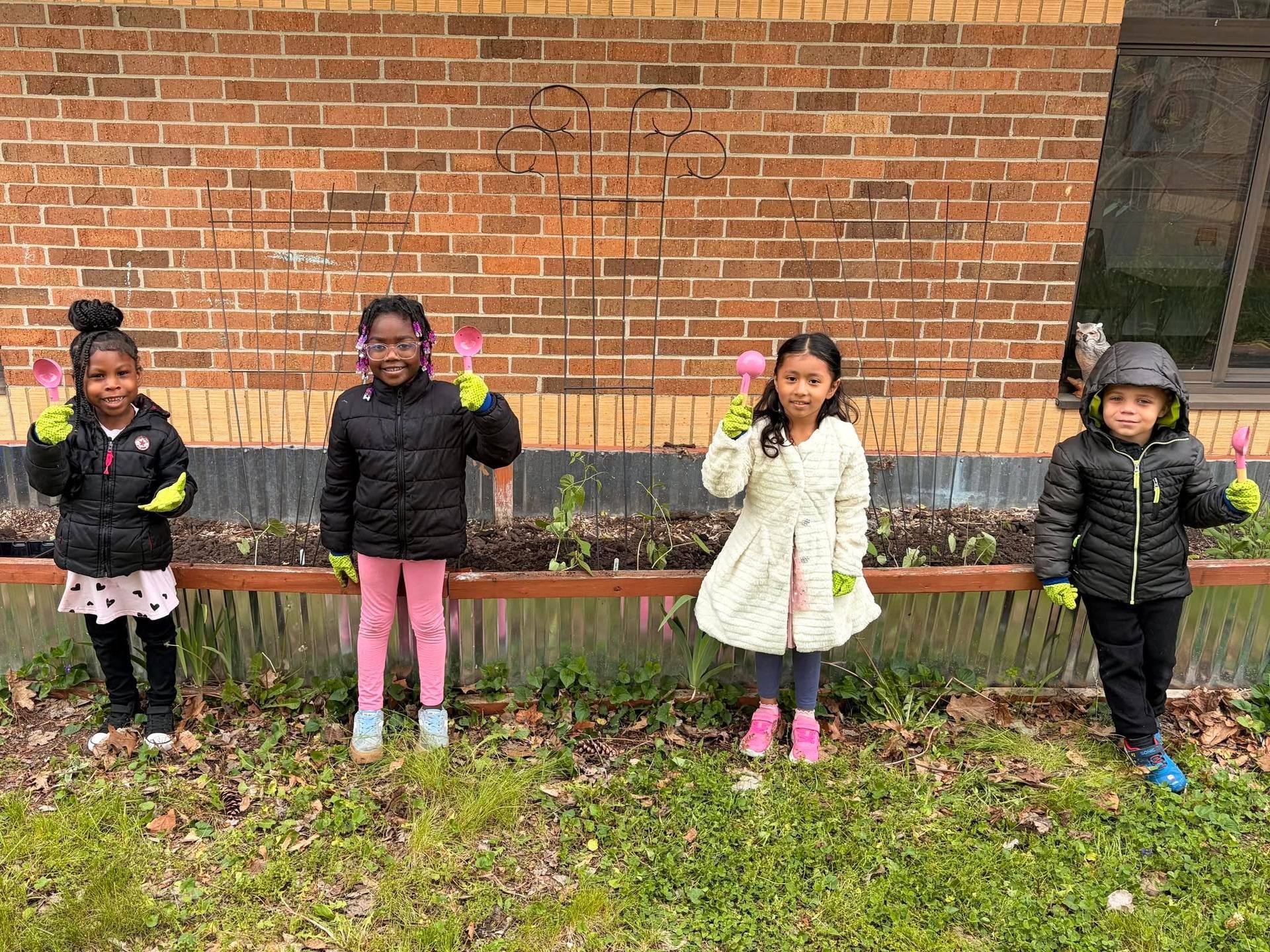
Dear Growing Hope Community, August 6th marked the last day of our eight-week Summer Teen Leadership Program! Over the past eight weeks, 12 Ypsilanti teens joined us as part of our farm staff for an intensive summer program of farm work and workshops on food justice, community organizing, social identity, and cooking lessons. The teens worked hard this summer caring for their Oasis Garden, Children’s Garden, and the Sharing Garden, harvesting food for our free produce cooler, and partnering with local organizations to deepen their knowledge about the Washtenaw County food system. The Teen Leadership Program is an integral part of Growing Hope, and we are so proud of and grateful for this incredible group of young people! This Summer, we had two Teen Crew Leaders, Sienna Troy and Nick Corvera-Garay, and they worked incredibly hard building community among new teen crew members, leading teambuilders, and leading our social identity workshops every Wednesday. They have a few reflections on their time in the Teen Leadership Program that they would like to share. We are so proud of their work at Growing Hope and wish them all the best in their future endeavors as Sienna goes off to college and Nick continues on into the after school program and as our Staff Representative on the Growing Hope Board of Directors!   Sienna Troy, Lincoln High School I’ve been at Growing Hope for three summers and unfortunately, I graduate from the program this year. I hate to leave, but I’m so grateful for the experiences I’ve had, the people I've met, and the knowledge I’ve gained. Growing Hope has gotten me more ready and prepared for life than any school ever will. I have learned how to be the best version of myself. If you asked me how I would describe myself my first year, I’d say introverted, quiet, and probably secluded. None of that describes who I am now. Working here has made me break out of my shell and create so many deep bonds. I have made so many friends and met so many new people who will forever have a special place in my heart. Growing Hope will be the only job I ever have where I’m excited to wake up in the morning and go to work. Being greeted every morning by beautiful flowers is such a special feeling especially when you’re the one who put the work into them. I even started my own garden using all the things I’ve learned. I loved taking in so much new knowledge during our workshops, so I could go home and tell everyone about it. There is so much passion flowing through me for the work we do and I’ll never be able to express how honored I am to be a part of it. I’m so grateful for all I’ve learned and even more thankful for Jenny and Esha for making this program as amazing as it is. I hope to take all the things I’ve learned here and pass it on. No matter how many years go by, Growing Hope will always be a part of who I am and what I want to represent. Growing Hope will always be a warm, welcoming, comfortable environment for me and I’m forever grateful for that. Nick Corvera-Garay, WAVE When I started at Growing Hope, I was in a very rough place in my life. I had been in and out of the hospital all year, I dropped out my freshman year, and I genuinely didn’t know what I was going to do with my future. I was struggling with my mental health, and I felt isolated from my peers. When I applied, I wasn’t expecting to get hired. Now, I am forever grateful that I was. Working here has been a life changing experience. I am now surrounded by people who love and support me in everything I do. I am surrounded by people who encourage me to be myself. I am surrounded by people who listen to my ideas, and take me seriously. At Growing Hope, I’m not just viewed as an intern. I’m viewed as someone who has valuable insight. Watching things grow around me– not just the plants, but the people, (myself included)– has shown me that there is hope for the future. It’s shown me that regardless of the conditions, the surrounding environment, whatever challenges life throws your way, you can grow. Even if someone comes and chews off all your leaves, you can be fruitful. (shout out to our soybean plants!) I’ve learned how to create meaningful change in my community, how to guide a team, how to keep fighting, and how to teach other people to do the same things. Even if I won't ever need to flip compost again, there’s a lesson to be learned about perseverance somewhere in between loaves of bread and orange peels. Both the people and the plants here have taught me things I wouldn’t have learned anywhere else. To me, this is more than a job, it’s a collection of lessons that I will carry with me throughout my entire lifetime. During my time here, I’ve accomplished many things. I helped plan garden beds, build a pond, paint murals around the farm, and last fall, I was elected to the Growing Hope Board as staff representative. I have been welcomed into this space from the beginning, and I am so glad to be in such an important part of this organization. Being the first teen elected to the board feels surreal, and it shows a change within the Growing Hope ecosystem I know we will continue on in the future. Trusting young people to lead and be in charge is important in any field of work, but especially food justice. We are the future, the torchbearers, the ones to create a brighter future. I am eternally grateful that the staff believed in my abilities, and I hope in the future, there are even more opportunities like this for young people like me. As I go into my third fall season, I can’t help but reminisce. Every year, so many people come into this program. I see myself in some of them, and I also see the ways they change and flourish here. I am honored to help guide and support these young people through their journeys. I believe this isn’t just a farm that grows food, but a place that helps our community grow, helps people grow into themselves, and helps us grow a brighter future. I now feel empowered to create change, to help everyone, and I feel that it is truly achievable. With the support of Growing Hope, I look forward to seeing all of the change the teens, myself included, create. I am eager for a brighter future, one that we will build together. I hope you, too, are eager. With love, Nick Corvera-Garay (PS: If you feel touched, empowered, or particularly generous- I’d deeply appreciate it if you considered donating to Growing Hope ! Your donations are matched through September, meaning anything you give will have double the impact. You can help teens like me feel empowered to create change, too.)
By Julius Buzzard August 1, 2026
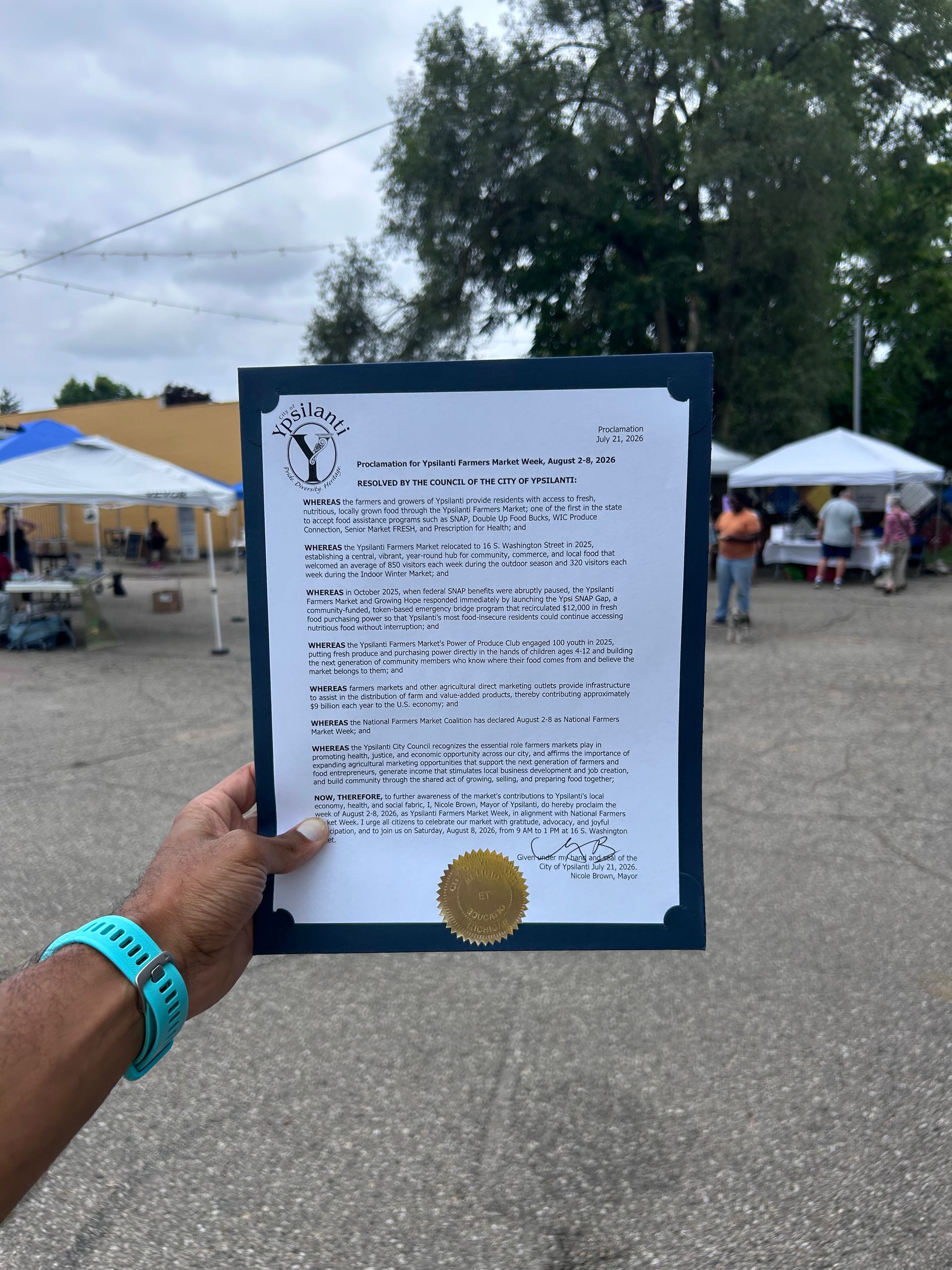
Beloved community, As we enter the final weeks of summer and back into the rhythm of the school year, it’s impossible not to recognize how hard it’s been to breathe as of late (in every sense). A few short weeks ago, smoke drifted down from wildfires burning across Ontario and settled over Southeast Michigan with force. As air quality alerts stacked on top of heat advisories, everyone from youth to elders was advised to mask up or otherwise remain indoors. In the same stretch, Michigan’s cyclospora outbreak kept climbing past six thousand confirmed cases. Understandably, many have been left feeling paralyzed. Clean air and safe food are not amenities; they are the foundation on which we build food sovereignty. Right now, it feels like that foundation is beginning to crumble, and crumble beneath some more than others. The folks breathing the worst air and eating the least trustworthy food are disproportionately Black, brown, Indigenous, low-income, elderly, young, or some combination of all of it. This pattern is known as environmental racism, meaning the way pollution, contamination, and environmental harm land hardest on communities of color and low-income communities. Whether it’s a decision about a permit, protective rights, or a pipeline, this happens by design. Last month, for example, Michigan's environmental agency approved permits allowing Enbridge to build a new tunnel for the Line 5 pipeline under the Straits of Mackinac, locking in another 99 years of fossil fuel infrastructure running beneath the largest freshwater system on the planet. While this devalues, or even ignores, the long-term health of our climate, economies, and water (another foundational element to life), the environmental harm of this decision is just the tipping point. Construction threatens ground that includes Native American burial sites, and tribes are being handed what one Native American Rights Fund attorney representing Bay Mills Indian Community called an agonizing choice between digging up and recovering their own ancestors before bulldozers arrive, or leaving that work to the state once construction starts. That same attorney, David Gover, put it plainly: "What is more sacred than how we treat our dead?" The grief, rage, and anxiety showing up in our community as a result of these compounding factors is real, merited, and inextricably tied to what’s happening to the land, water, and air on which we, and our food, depend. But it’s not the end of the story. Behind Growing Hope's mission is a strongly rooted belief that communities deserve autonomy within the entirety of their food system. You cannot separate a just food system from a just relationship to place. The cure to systems that poison our air, contaminate our food chains, and desecrate sacred ground is hope that is deeply seeded in community. It's in building a local food system that celebrates the growers, land stewards, and makers that paint a portrait of a vibrant local food system. And that's what a farmers market is, when you get down to it. It's a supply chain you can see with your own eyes. It’s names you know and fields you can visit. It’s fresh produce that arrives from caring hands just moments away from home. It's food grown by people accountable to this community. And when we feel betrayed by the very air and food we need to survive, this is all more important than ever. That’s why I’m excited that this is reaching you right on the edge of National Farmers Market Week, August 2-8, formally proclaimed by the Ypsilanti City Council at their last meeting. Come join us in our weekly celebration of local food at the Ypsilanti Farmers Markets on Saturdays, 9a-1p, at the Ypsilanti Farmers MarketPlace (16 S. Washington St.) Underneath all of it (the smoke, the cyclospora headlines, the pipeline permits) is us. A community vying for a food system where we can gather, cook, and grow together without fear. See you at the market, Julius P.S. Even if you can’t join us to celebrate National Farmers Market Week on Saturday, August 8, you can share your thoughts and help us plan for the future (even get entered to win a great prize) by completing our annual market survey .
By Julius Buzzard July 1, 2026
Introducing the growing hope accelerator kitchen!
ALL ARTICLES

STAY UP TO DATE

GET PATH'S LATEST

Receive bi-weekly updates from the church, and get a heads up on upcoming events.

Contact Us
A close up of a man wearing a beanie and a grey shirt
A black and white logo that says `` beloved believe ''
A woman is sitting on the ground playing a guitar.