Article

Rooted Again: A National Farmers Market Week Reflection

August 1, 2026

Beloved community,


As we enter the final weeks of summer and back into the rhythm of the school year, it’s impossible not to recognize how hard it’s been to breathe as of late (in every sense). 


A few short weeks ago, smoke drifted down from wildfires burning across Ontario and settled over Southeast Michigan with force. As air quality alerts stacked on top of heat advisories, everyone from youth to elders was advised to mask up or otherwise remain indoors. In the same stretch, Michigan’s cyclospora outbreak kept climbing past six thousand confirmed cases. Understandably, many have been left feeling paralyzed.


Clean air and safe food are not amenities; they are the foundation on which we build food sovereignty. Right now, it feels like that foundation is beginning to crumble, and crumble beneath some more than others. 


The folks breathing the worst air and eating the least trustworthy food are disproportionately Black, brown, Indigenous, low-income, elderly, young, or some combination of all of it. This pattern is known as environmental racism, meaning the way pollution, contamination, and environmental harm land hardest on communities of color and low-income communities. Whether it’s a decision about a permit, protective rights, or a pipeline, this happens by design.


Last month, for example, Michigan's environmental agency approved permits allowing Enbridge to build a new tunnel for the Line 5 pipeline under the Straits of Mackinac, locking in another 99 years of fossil fuel infrastructure running beneath the largest freshwater system on the planet. While this devalues, or even ignores, the long-term health of our climate, economies, and water (another foundational element to life), the environmental harm of this decision is just the tipping point. 


Construction threatens ground that includes Native American burial sites, and tribes are being handed what one Native American Rights Fund attorney representing Bay Mills Indian Community called an agonizing choice between digging up and recovering their own ancestors before bulldozers arrive, or leaving that work to the state once construction starts. That same attorney, David Gover, put it plainly: 


"What is more sacred than how we treat our dead?" 


The grief, rage, and anxiety showing up in our community as a result of these compounding factors is real, merited, and inextricably tied to what’s happening to the land, water, and air on which we, and our food, depend. But it’s not the end of the story. 


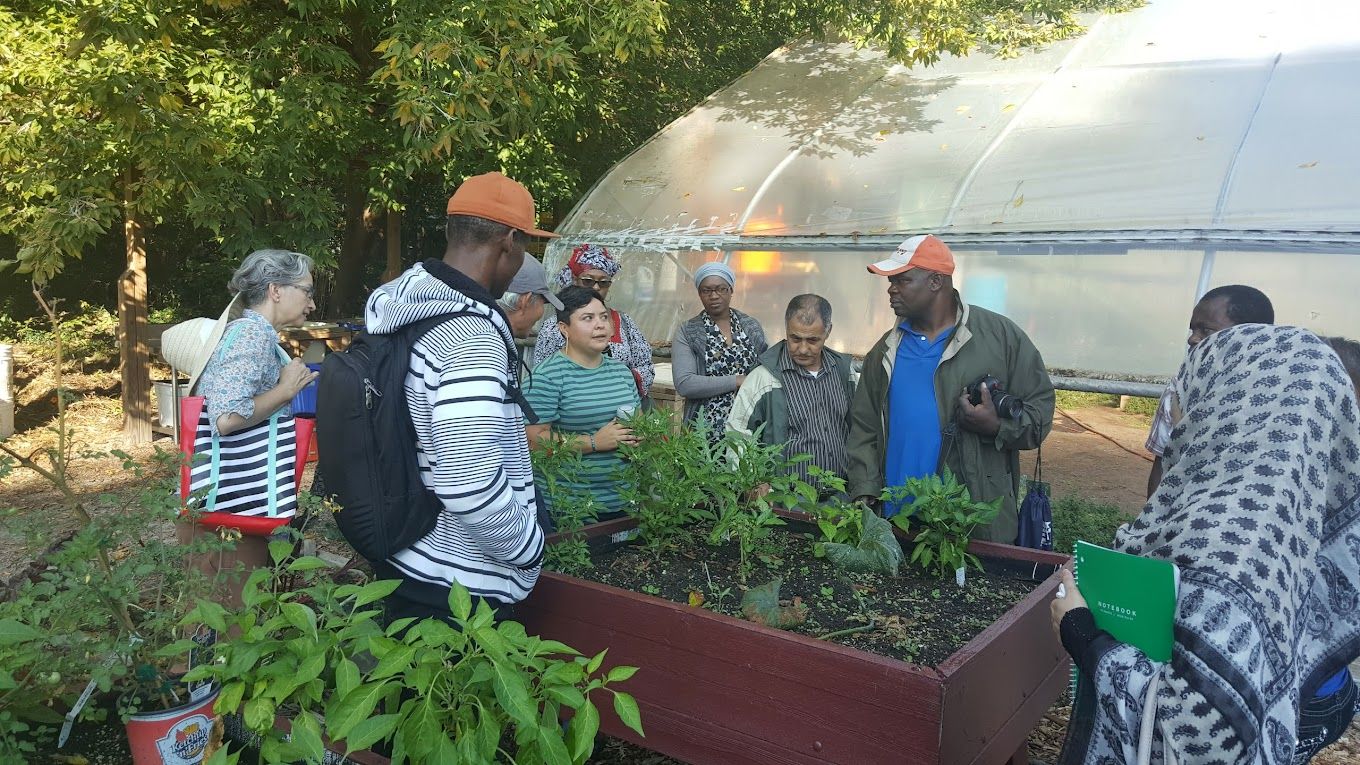
Behind Growing Hope's mission is a strongly rooted belief that communities deserve autonomy within the entirety of their food system. You cannot separate a just food system from a just relationship to place. 


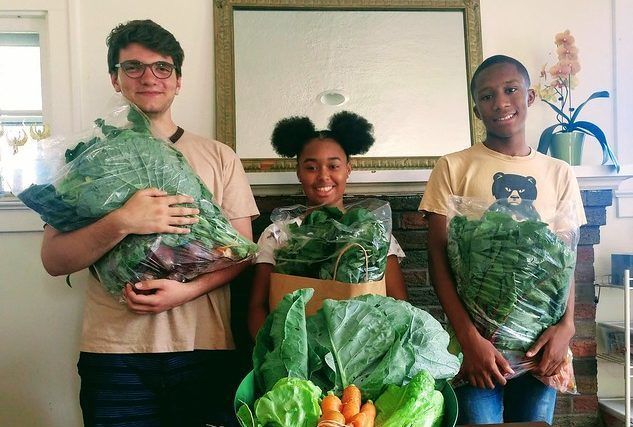
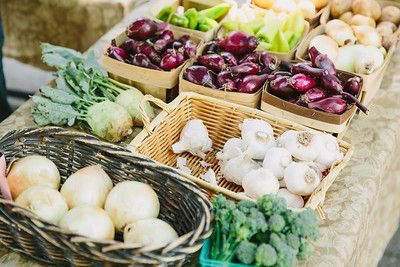
The cure to systems that poison our air, contaminate our food chains, and desecrate sacred ground is hope that is deeply seeded in community. It's in building a local food system that celebrates the growers, land stewards, and makers that paint a portrait of a vibrant local food system. And that's what a farmers market is, when you get down to it. 


It's a supply chain you can see with your own eyes. 

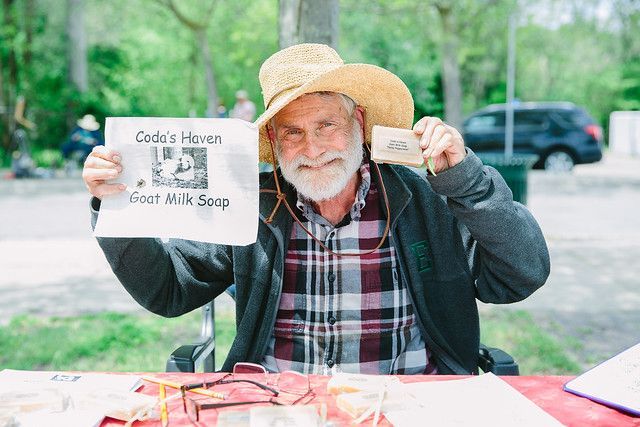
It’s names you know and fields you can visit. 

It’s fresh produce that arrives from caring hands just moments away from home. 

It's food grown by people accountable to this community. 


And when we feel betrayed by the very air and food we need to survive, this is all more important than ever. 


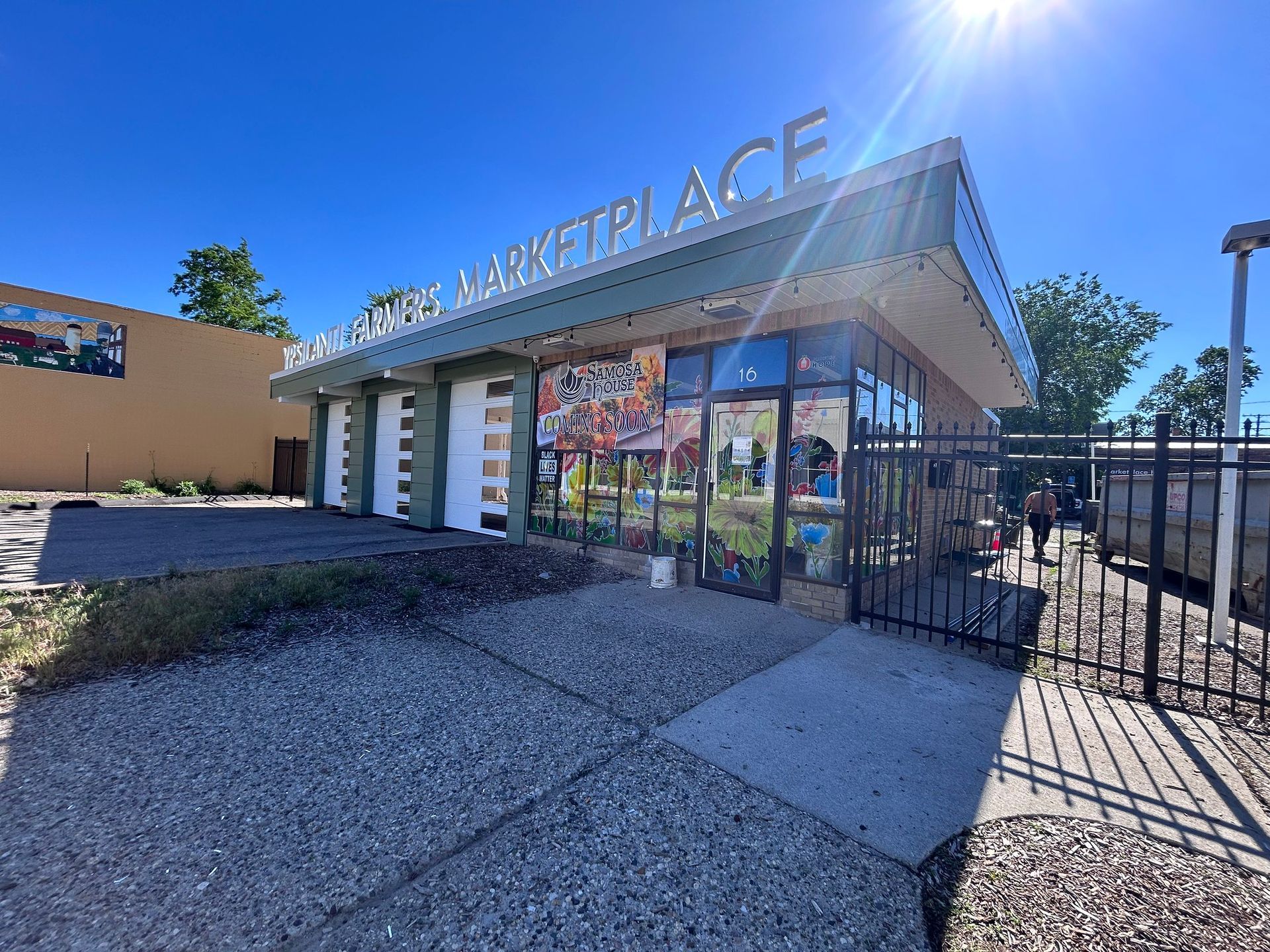
That’s why I’m excited that this is reaching you right on the edge of National Farmers Market Week, August 2-8, formally proclaimed by the Ypsilanti City Council at their last meeting. Come join us in our weekly celebration of local food at the Ypsilanti Farmers Markets on Saturdays, 9a-1p, at the Ypsilanti Farmers MarketPlace (16 S. Washington St.)


Underneath all of it (the smoke, the cyclospora headlines, the pipeline permits) is us. A community vying for a food system where we can gather, cook, and grow together without fear. 


See you at the market, 


Julius


P.S. Even if you can’t join us to celebrate National Farmers Market Week on Saturday, August 8, you can share your thoughts and help us plan for the future (even get entered to win a great prize) by completing our annual market survey

share this

Related Articles

Related Articles
By Julius Buzzard July 1, 2026
Introducing the growing hope accelerator kitchen!
By Julius Buzzard June 1, 2026
Beloved community, June is alive in Ypsilanti, and so are we! The farm is buzzing with pollinators, heavy with the first fruits of the season, keeping the produce cart full, and tended by caring hands, sowing hope along with each seed. At the same time, the MarketPlace is filling back up with color and noise with the joy of neighbors who have looked forward to the market all winter. We have so much to celebrate this season! Namely, the Tuesday Farmers Market is back! Starting tomorrow (June 2), the Ypsilanti Farmers Market will run not only on Saturday mornings, but also every Tuesday from 3 to 7 pm, through August, right here at the Ypsilanti Farmers MarketPlace. That means every week we’ll have two opportunities to invest in our local food system while building the community care that makes a market special. This matters more than it might seem on the surface. Many community members have shared that while they love the Ypsilanti Farmers Market, want to support local farmers and makers, and believe in local food, Saturday mornings simply do not work for their lifestyles. Saturday mornings may be reserved for overtime shifts or soccer games, or to recover from a week that didn’t seem to give anything back. For some, they can only get the financial assistance or translation services needed to fully participate on a weekday. For many of our neighbors, Saturday mornings are simply not free. Access can only be actualized when every community member experiences it. It’s as much about time as it is about proximity. We've always said that the Ypsilanti Farmers Market is for everyone in our community, and the Tuesday market is our effort to live that out more fully. The Ypsilanti Farmers Market, in each step toward the future, is a step toward a living vision we have built together. Toward a vision of the Ypsilanti Farmers MarketPlace as a community food hub, an anchor in the life of our city and of our local food system. A place where neighbors come together, build community, and leave united; all while gathering around food. The Ypsilanti Farmers Market is not purely about simple transactions. It’s about practicing what it looks like for a community to feed itself. It nurtures spaces where farmers can move their harvest and where small businesses can grow. The Ypsilanti Farmers MarketPlace is fostering that mid-week run-in with a neighbor, reminding us that we are not alone. We are grateful to the farmers, vendors, and partners who said yes to this. And we are grateful to our entire market team, who make it possible week after week, with devotion and creativity that continues to humble me. This spring, our Teen Leadership Program launched our second Seed Library, located at the Ypsilanti Farmers MarketPlace, which is available to the community at every market. Because everyone deserves a chance to grow. Seeds hold within them the agricultural knowledge of generations, the food traditions of all of humankind. When we talk about seed sovereignty, we are not simply speaking about the practical reality of who controls the global seed supply (the four corporations that control 60% of the seed and pesticide supply). Rather, it goes a level deeper into the question of who and what gets to be remembered. "Farmers are literally archivists of the land." -Abena Offeh-Gyimah Seeds are stories. They are living reminders of all the ancestors who walked before us. When we save and share seeds, we are practicing reciprocity with Mother Earth, and with one another. The seed library that our teens built is just the beginning. Our hope is that it grows into a circular system . We dream of a future where the seed library at the farm and MarketPlace are filled with self-labeled packets of seeds saved from the harvest of our community. We dream of a food future that sits in the hands of the very community that tends it. This is seed rematriation in practice, and I’m excited to grow with you. In solidarity, Julius P.S. Your support makes this food system possible, whether it is financial, volunteer, or saving seeds; we’re in this together. Keep an eye out for future newsletters for a hands-on seed-saving workshop later this year.
By Julius Buzzard May 1, 2026
Beloved community, May has arrived, and Southeast Michigan has exhaled into spring. As seedlings begin to sprout and Mother Earth does her thing, After a long winter of waiting, there is something deep inside each of us that leans toward the light. And I think it’s crucial that we lean into that light after so much darkness. That we lean into what it means to reach towards what we need and deserve, not simply an act of grace, but as a right of every living organism. This spring, I want to lean into the right to food. Sometimes, the most radical ideas are also the simplest. The right to food means every person, regardless of zip code, income, skin color, or the circumstances of their birth, has the inherent right to access sufficient, safe, nutritious, and culturally appropriate food. And it doesn’t start at the dinner table. It incorporates the farmer who needs land to grow, the farmworker who deserves a living wage, and the maker who wants to build the food business of their ancestors' dreams. The right to food means that spaces such as the Ypsilanti Farmers MarketPlace and Growing Hope Urban Farm are part of community infrastructure. The right to food is a whole-systems claim that urges us to stop seeing hunger as a distribution issue and instead recognize it as an issue of who is invited to the table. This is not a novel idea. The right to food has been recognized in international law since 1948, when the Universal Declaration of Human Rights enshrined it as part of every person's right to an adequate standard of living. It was further codified in the 1966 International Covenant on Economic, Social, and Cultural Rights, which is legally binding for 172 countries. Notably, our country has been missing from that list. While enough food is produced to feed everyone, and still, up to 720 million people experience hunger, and 2.6 billion cannot afford a healthy diet. Today, one in seven residents in Washtenaw County questions where their next meal will come from. This represents a failure of will, not imagination. It’s the result of systems that treat food as a commodity rather than a birthright. But we don’t have to accept that as the finish line. There are multiple states and communities within our country that have codified the right to food, and we’d love for you to join us in advancing and declaring this right in our community. By treating food insecurity as a rights violation rather than a personal failing, we shift the policy debate from political aspiration to human obligation. It’s this shift, from charity to solidarity, that lines the foundation of Growing Hope’s work. Just a few days ago, we sent a group of staff, partners, and volunteers to Lansing to walk through the doors of power and speak with honesty and humility. We talked about what the right to food means on the ground. We talked about what we believe Michigan can do. We advocated for systems that uphold the right to food for every aspect of the food system. Importantly, we left knowing that we are not alone in this. Across the country, community organizers are rallying around this core principle. As one organizer stated, “We need to state the obvious right now, because the systems we relied on are being eroded very actively." We are not growing gardens. We are growing self-determination. We are growing community. We are Growing Hope. I said at the beginning that food is a right, and I believe that with everything in me. Unfortunately, rights don't enforce themselves. They require community to join together, to ensure accountability, and to be a continual reminder of what we are committed to. This is the community we are building. We invest and believe so deeply in this viewpoint for one simple reason, which feels more true now than ever before: community is medicine. Together we share some ailments, but our collective resources are innumerable. And while we don’t know where we’ll end up on the other side of the change and chaos swirling around us, we can be certain that we’ll arrive together. Proximity and hope are foundational building blocks for a community of healing. This is the type of community that demands systems of care that uphold our basic human rights, while sharing its resources to meet our collective needs. Together, we are growing food. We are gathering. We are ensuring the right to food. And we are healing one another through community. We are watching the systems we have long depended on fray at the edges in real time. We are responding, in unison, saying: we are not waiting for permission to be fed. That is the work. Thank you for being part of it. In solidarity, Julius P.S. The right to food is more than a principle. It's a promise we make to one another. You can read our Right to Food Declaration, add your name, and share your story (with a chance to win a $50 gift card) at growinghope.net/righttofood .
ALL ARTICLES

STAY UP TO DATE

GET PATH'S LATEST

Receive bi-weekly updates from the church, and get a heads up on upcoming events.

Contact Us

A close up of a man wearing a beanie and a grey shirt
A black and white logo that says `` beloved believe ''
A woman is sitting on the ground playing a guitar.