
Article

2025 Teen Graduate Reflections

August 21, 2025

Dear Growing Hope Community,


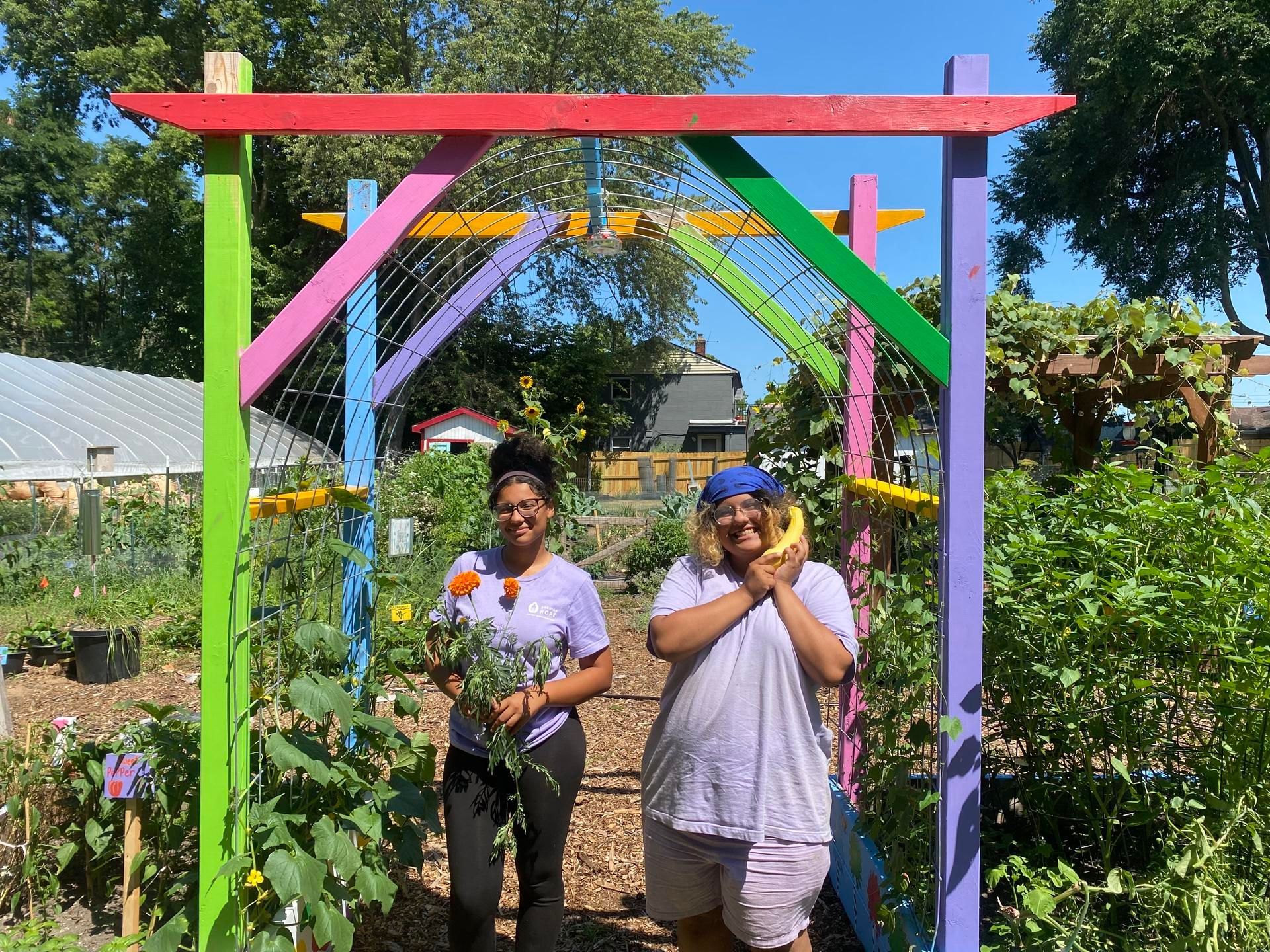
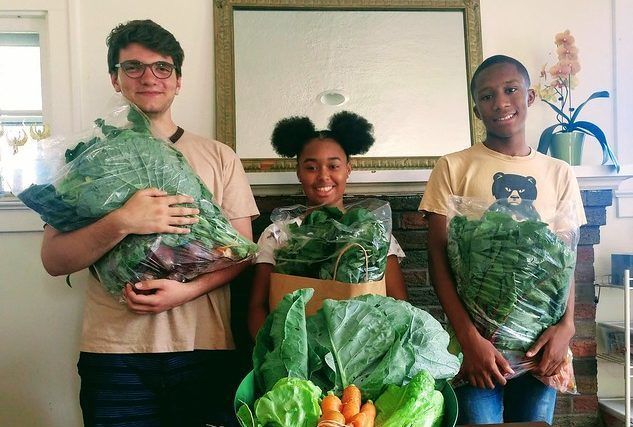
August 7th marked the last day of our eight-week Summer Teen Leadership Program! Over the past eight weeks, 12 Ypsilanti teens joined us as part of our farm staff for an intensive summer program of farm work and workshops on food justice, community organizing, social identity, and cooking lessons. The teens worked hard this summer caring for their Oasis Garden, Children’s Garden, and the Sharing Garden, harvesting food for our free produce cooler, and partnering with local organizations to deepen their knowledge about the Washtenaw County food system. 


The Teen Leadership Program is an integral part of Growing Hope, and we are so proud of and grateful for this incredible group of young people! This Summer, four of our teens, Josephine Smith, Tuula Martínez, Jaylah Cotton, and Eli Harris, graduated from High School and will be moving on from the Teen Leadership Program. They have a few reflections on their time in the Teen Leadership Program that they would like to share. We are so proud of their work at Growing Hope and wish them all the best in their future endeavors! 


Josephine Smith, YCHS 

Hi, my name is Josephine Smith, and I was with Growing Hope for 2 years. Before coming, I did not know how to actually think of myself as a person. I was aimlessly drifting through life, not knowing what to do with myself or knowing my future goals. After joining Growing Hope, I was awakened to feelings of hope because I became aware that I have worth in my life. I can use myself to help others. I gained experience by doing lots of work for the community, the most impactful being that we helped distribute delicious food for people who need it the most. Growing Hope is a beautiful and life-changing program for teenagers, and can help guide them as they grow into people who understand that they have worth in this crazy world. I love you, Growing Hope!


Eli Harris, WAVE

My name is Eli. As of writing this, I am coming to the end of three long years with Growing Hope. It’s a bittersweet experience for me, as my time with this amazing organization — and the even more amazing people who run it — has been the best three years of my life. 


When I joined the Teen Leadership program, I questioned why I was there. My stance on people was poor, and my attitude poorer. I would say I didn’t take the program seriously at first. Often being grouchy and pedantic about the work we did, and the people around me. 


But I wasn’t treated as such. I was still given as much care, space, and voice as everyone else. Over time, I began to feel like my attitude towards things for the last couple of years had been fueling my grief and anger — and I started to try and change how I approached things.


The amazing advisors, Jenny and Esha, were the cornerstone of that growth. It wasn’t just their welcoming attitudes towards the large group of unruly teenagers (myself included) — it was their consistency.


When I needed support, they gave it.

When I needed guidance, they offered it.

When I wanted to share about my day and what I had been up to outside of the program, they listened.


And when I slipped back into old habits or wasn’t being the version of myself they believed in, they were direct — they told me, made me aware, and helped guide me back to who I was working to become.


I’ve grown more than I sometimes realize with Growing Hope. The workshops, especially, have taught me more skills than I could list — and more importantly, they’ve helped connect me to the Ypsilanti community, our food system, and the amazing people who keep it all running.


 I wouldn’t be who I am today without joining this incredible program or without meeting all the amazing people I’ve had the chance to grow with. 


If you’re reading this and have the opportunity to join: do it. I can’t recommend it enough.


Tuula Martínez, ECA

Hi Saplings/Everyone! 🌱, 


My name is Tuula Martínez, I am an eighteen-year-old youth of Ann Arbor & Ypsilanti, and I have been working in the Growing Hope Teen Leadership Program for almost three years. The first two summers I was simply a (paid) teen intern, and in my last summer I was ‘promoted’ into a crew leader, where I took on more leadership opportunities and responsibilities. 


This summer was really the time for me to not only deepen the knowledge I had gained from my previous two summers (and after-school programs), but also to apply said knowledge and leadership skills as I entered a new stage within the program. 


Working in the teen program has taught me a lot about impact. Before working here, I didn’t really think I had an impact on people or places, and I often doubted my own ability. Growing Hope does an amazing job of teaching you about the work that needs to be done to help our community, and giving you resources or opportunities to take part in it (whether through the program or outside of it). Through these opportunities, I have been so lucky to see the community come together. I have been able to talk to people and hear how much they appreciate the work Growing Hope does, and it really makes you proud of the work you’re a part of. 


My confidence has also significantly improved while I’ve worked with the teen program. Being in a leadership role this summer, and realizing the people who came before also didn’t have everything figured out, has surprisingly really comforted me. I think confidence comes when you, of course, 1. Start trusting in your abilities and knowledge, but also 2. When you realize that everyone is trying their best, and no one does things perfectly. I suppose I hope, as I leave this program, that perhaps my coworkers can look up to me in the same ways I looked up to my past crew leaders. And I hope that through watching me figure out and grow into this leadership role, I can in turn teach them that they are also just as capable, even if they haven’t figured everything out. 


The community itself is also something I’d like to touch upon. I feel it is such a treat to work somewhere where you’re genuinely excited to see the people. Over my three years working in the program, I have gotten the opportunity to meet so many awesome people and really befriend everyone. That is something that I love so much about the program, as you get the chance to get to know everyone and build your own dynamic with each person. The culture is something so special, because it bred an environment of comfort, which made it feel like a second family in a lot of ways. 


In the future, I hope to study at the University of Michigan, majoring in Archeology and minoring in Art History. My plan for the near future is to do one more semester of free college classes at my high school (the ECA), and take the next two semesters off from school (to apply to the UofM for the following fall, and look for museum-based internships). This upcoming summer, I hope to become involved with archaeology fieldwork through the UofM Museum of Archeology (which may involve travelling, exciting!). Though my choice of career will most likely be museum/history related, I know that I would love to stay connected to Growing Hope, as Environmental education and stewardship have become very important to me through working here. 


Thank you to everyone I’ve had the privilege to meet, get to know, and work with. You’ve all had a profound impact on me. 🩵


Tuula Martínez


Jaylah Cotton, Skyline

I applied to the Teen Leadership Program because I already loved plants and gardening. I didn’t realize how much I would learn outside of farmwork, but it’s all helped me grow tremendously as a leader, a member of my community, and just as a person. I’ve also found that it’s kept me very grounded and taught me to appreciate what I have and what I can do. The overall work I’ve done is truly my proudest accomplishment in life so far. From selling herbal tea bags at the farmers market, to digging out our new wildlife pond, and leading weekly social identity workshops, I can’t pinpoint a single favorite thing! 


However, I can express how grateful I am for the opportunities that working with Growing Hope has given me. Because of the Teen Leadership Program, I was awarded one of AAACF’s 2025 Young Citizens of the Year. The award recognizes leadership and community service among Washtenaw County teens. Thanks to Jenny and Esha’s nomination, I was selected and got to participate in an MLive interview (which went to print/online in May) about my work with food insecurity and Growing Hope. I received a scholarship as well. This has meant so much to me because it feels great to have the work I’ve done be recognized, but it’s also helping to further my education!


Soon, I’m headed off to Michigan State University to major in Elementary Education, meaning all the leadership skills I’ve learnt will be put to great use! I’m so excited to go somewhere new and keep learning, too, but I’m forever grateful that I have a place back home in Ypsi where I am always welcome.


- Jaylah

share this

Related Articles

Related Articles
By Julius Buzzard April 1, 2026
Beloved community, April arrives the way it always does in Michigan; tentatively at first, then all at once. One morning, the ground is still stubborn and cold, and the next, something is pushing through. We call it Earth Month, but Mother Earth does not need a month. Mother Earth is always working. What Earth Month does, at its best, is return us to attention; to the slow, faithful labor happening beneath our feet, whether we notice or not. This month, I want to talk about that labor. Not just the labor of growing food, but the labor of staying whole while doing this work. The labor of belonging to one another. The labor of grief. Food sovereignty has never been only about food. It has always been about the conditions under which people live; who controls the land, who decides what is grown and for whom, whose hands are trusted to tend it, and whose labor is rendered invisible in the process. When we plant together, across our differences, we practice a different way of being in relationship with the earth and with each other. We are rehearsing the world we are trying to build. This is food sovereignty at its fullest: not a policy framework alone, but a practice of restoration. Of the land, yes. But also of people. Of community. Of self. Earth Month, then, is not just a celebration of the natural world. It is an invitation to remember that we are part of it; that the health of our soil and the health of our souls are not separate questions. This spring, I am carrying something heavier than usual. And I suspect many of you are too. Our community lost Melvin Parson. And that loss has settled into me like the coming of spring here in Michigan: quietly, then suddenly, everywhere. Melvin was a farmer, a visionary, and a neighbor. Through We The People Opportunity Farm, he built real pathways of belonging and dignity. He understood that food sovereignty is not only about growing food; it is about restoring people to possibility. Melvin planted seeds that will outlive all of us. In the soil and in the lives he helped rebuild. Rest in power, Melvin. We will keep tending what you planted. But grief does not arrive alone. And I think we need to name that. Something has been accumulating in many of us. The anxiety of not knowing whether your rent will hold, whether the program keeping your mother's medication affordable will survive the next budget cycle, whether the news tomorrow brings another cut, another threat, another loss. The weight of watching war unfold on a screen while packing your child's lunch. The low hum of uncertainty has grown so constant that many of us have stopped recognizing it as something being done to us. Mental health in our communities is rarely one dramatic moment. It is the slow erosion of the conditions that makes life feel possible. And right now, those conditions are under pressure from every direction. We are not imagining it. It is real. And it deserves to be named. I do not want to move past this moment too quickly, because I think it is asking something of us. Those of us who work in food systems, in community organizing, in the daily labor of trying to repair what has been broken, we carry a particular weight. The need is constant. The resources are not. The work is relational, which means every loss is personal. Every family facing hunger has a name. Every policy that fails our community lands in someone's body. We are not separate from the communities we serve. We are one of them. And that means the strains of this moment: economic precarity, political hostility, grief, isolation, and the relentless demand to do more with less all live within us. I have been thinking about what it means to tend ourselves the way Mother Earth tends herself. To acknowledge that fallow seasons are not failures. That rest is not retreat. That asking for help is not a weakness, but the most honest form of community care. Mother Earth is not asking us to be strong; she’s asking us to be present. This April, I am inviting Growing Hope's community into that same practice. Tend your plot, yes, but also tend your people. Check on your neighbors. Come to the farm not just to grow food, but to be held by the community. Let the soil remind you that transformation is slow, and real, and worth it. We are in this together. And together is the only way through. In solidarity, Julius P.S. If this month is weighing on you, you don't have to carry it alone. The NAMI HelpLine offers free, confidential one-on-one support, mental health information, and resources — available Monday through Friday, 10am–10pm ET. Call 1-800-950-NAMI (6264) or text NAMI to 62640. And if you need a reason to get outside and be with people, join us on April 11, 10am–1pm for our Spring Seedling Distribution.
By Julius Buzzard March 27, 2026
Beloved community, Last season, organizers of all sizes hosted 168 events at the Ypsilanti Farmers MarketPlace, from mutual aid distributions and cultural gatherings to health outreach and food policy conversations. These moments reflect how we steward shared resources to maximize good and meet multiple community needs at once. At the heart of it all is the Ypsilanti Farmers Market itself. If you’ve spent any time at the market, you know that it’s never just been a place to shop. It’s a place to linger. To listen. To organize. To feed one another, body and spirit. Together, we are building a food ecosystem where everyone has access to fresh produce and where advocacy, mutual aid, and belonging intersect. That was especially clear this year when our community faced a sudden gap in food access. When early federal funding shifts threatened nutrition dollars, our community didn’t wait. Together, we rapidly designed and launched the Ypsi SNAP Gap Program, a locally powered response that ensured hundreds of local families could continue to access food. As we move through spring, your support sustains this work; keeping vendor fees low, strengthening food access programs, and maintaining the MarketPlace as a space for belonging. Every gift sustains a place to live, organize, and nourish one another. With deep gratitude, Julius Buzzard Executive Director P.S. Your early spring support ensures we’re ready to respond when our community needs it most.
By Julius Buzzard February 26, 2026
Beloved community, March is National Nutrition Month, and across the country, we’re told to read labels more closely, count nutrients more carefully, and “eat real foods.” But nutrition is not a trend cycle; it is a question of power. I invite you to join me in curiosity and ask: Who has access to what’s being recommended? Who can afford the “real” food being celebrated? Who grows it, and who gets paid? Are we treating illness, or are we transforming the conditions that produce it? Health outcomes matter, but health equity goes further. Health equity asks why certain neighborhoods have higher rates of diabetes in the first place. It asks why fresh food feels exceptional in some zip codes and ordinary in others. It asks why farmers struggle to survive while healthcare systems expand. If we do not address land access, procurement policy, and economic extraction, then “eat real” risks becoming a quiet moral judgment instead of a structural commitment. Michigan once modeled real structural commitment through 10 Cents a Meal for Michigan's Kids & Farms ; matching school dollars to buy Michigan-grown produce and making local food standard in cafeterias. It strengthened children’s health, stabilized farmers, and shifted institutional purchasing habits. This year, the program was not funded. And as a result, students miss the chance to build lifelong food memories rooted close to home. And still, we are not retreating. Together, we are building a foundation of generational health. Generational health is the long game. It is the work of ensuring that today’s third grader doesn’t just eat a fresh apple; but grows up expecting apples from Michigan orchards in their cafeteria. It is ensuring that a teen doesn’t just volunteer at the market; but understands zoning laws, farm bills, and supply chains well enough to challenge them. This is the foundation of our theory of change. We build generational health by shaping habits early and reinforcing them often; through initiatives like our Teen Leadership Program, where young people gain the skills and critical lens to navigate and influence the food system; through field trips to our urban farm and incubator kitchen, where learning is rooted in soil; through Farm to School programming that normalizes local procurement; and through Power of Produce (POP) Club, where children practice agency by choosing fresh food for themselves. This is how we shift from reactive nutrition work to regenerative nutrition culture. We do this by pairing conversations about Food as Medicine, dietary guidelines, and eating real foods, with: An insistence that farmers are part of the prescription. Guidelines that align with affordability and access. Understanding that real foods need to be reachable, culturally meaningful, and dignified. Nutrition is not simply about what’s on a plate. It is about who has the right to thrive. This National Nutrition Month, I invite you to see nutrition not as an individual burden, but as a collective project that treats fresh food not as charity, but as infrastructure. We are cultivating a community where children expect fresh produce, where farmers are stable and respected, and where health is inherited as legacy. That is generational health. And that is the future we are growing together. In solidarity, Julius P.S. Check out the FoodCorps Policy Action Map or sign up for our Farm to School Newsletter if you’re interested in building generational health.
ALL ARTICLES

STAY UP TO DATE

GET PATH'S LATEST

Receive bi-weekly updates from the church, and get a heads up on upcoming events.

Contact Us

A close up of a man wearing a beanie and a grey shirt
A black and white logo that says `` beloved believe ''
A woman is sitting on the ground playing a guitar.