Article
No Fear in the Food System
Beloved community,
Many hearts, mine included, remain heavy as we enter into a new month.
Right now, immigration enforcement is being used in ways that are destabilizing people’s lives, and in the process, destabilizing the food system that all of us depend on.
Across the country, intensified immigration crackdowns are pushing workers into hiding. People are staying home rather than risk detention. Parents are weighing whether it’s safe to take their children to school. Farmworkers, food processors, delivery drivers, and food service workers are being forced to choose between survival and visibility.
Immigrants are essential to every step of how food moves in this country.
They plant and harvest crops. They process meat and produce. They transport food across regions. They cook and serve meals. When enforcement actions target farms, food facilities, or entire neighborhoods, the consequences ripple outward immediately: fields go understaffed, food rots before it’s harvested, supply chains strain, and prices rise. Families, especially those already navigating scarcity, are pushed closer to hunger.
A food system built on fear cannot feed people well.
And a just food system depends on more than abundance.
It depends on safety.
It depends on dignity.
It depends on sovereignty.
Here in Ypsilanti, this national climate is not abstract. Families are feeling it in their bodies. Schools have warned parents to take precautions amid reported ICE activity. That alone should stop us in our tracks. When fear follows children into classrooms, we are witnessing a profound failure of care.
At Growing Hope, we refuse to accept fear as the cost of feeding one another.
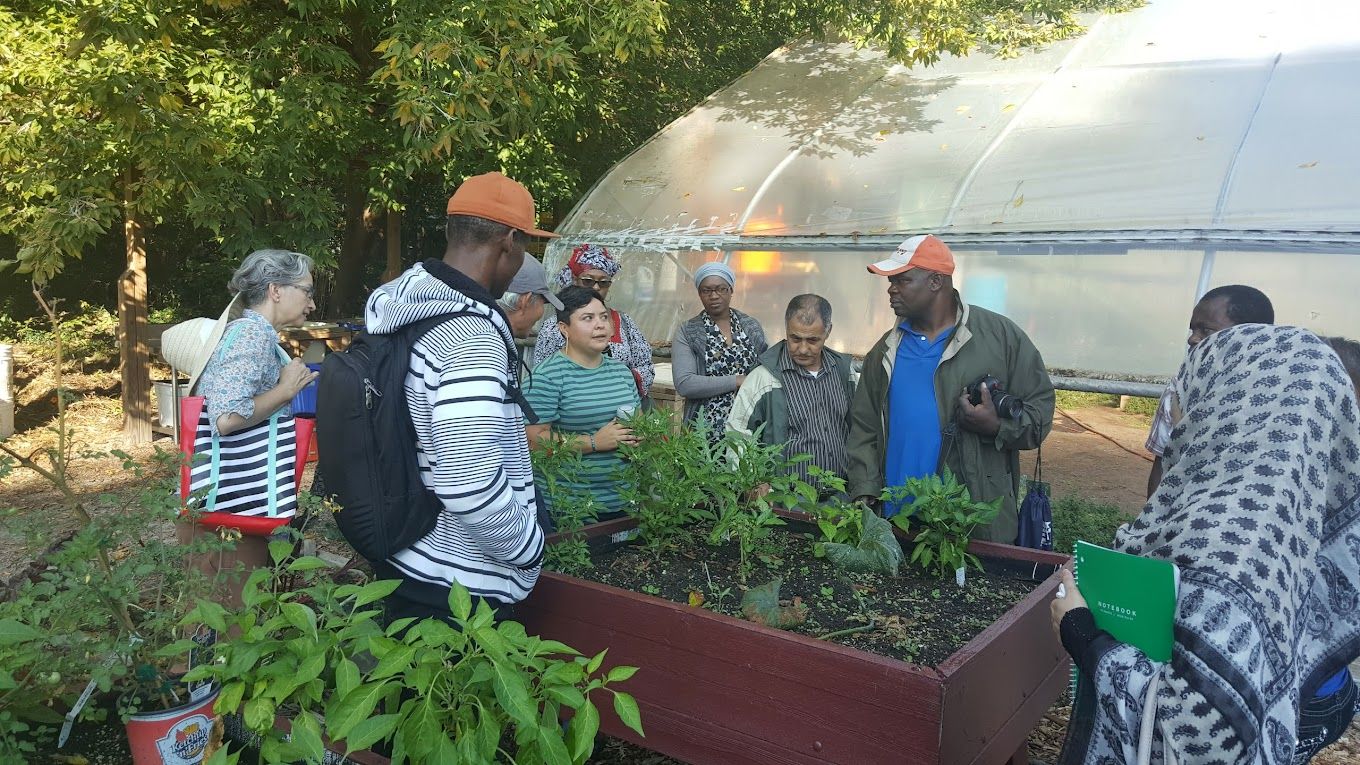
The Growing Hope Urban Farm and the Ypsilanti Farmers Market are built on the belief that everyone deserves a safe and welcoming place to gather, grow, and nourish one another. We affirm clearly and publicly that no person should be targeted, questioned, detained, or surveilled based on immigration status.
Over the past several months, we’ve been developing response plans for our markets, events, and shared spaces that center collective care. This includes clear protocols, staff and volunteer training, and alignment with partners who understand that food access and community safety are inseparable. Safety is not separate from justice.
If people are afraid to buy, sell, grow, or gather around food, then we are not talking about a functional food system; we are talking about harm dressed up as policy.
As we move through Black History Month, I am reminded that Black food history has always taught us this lesson: when systems fail us, we feed each other. From mutual aid kitchens to cooperative land ownership, from feeding children before school to organizing entire communities around food, our ancestors understood that food is both care and resilience.
This is the work in front of us now: to stand in solidarity across Black and immigrant communities, to reject policies that criminalize survival, and to build food systems rooted in dignity rather than disposability.
I carry this responsibility with humility.
I am here because others fed people when it was dangerous to do so.
I am here because food has always been one of our most powerful tools for care, resistance, and imagination.
And I am here because silence has never kept us safe.
In solidarity,
Julius
P.S. How you can show up right now: Stay informed. Interrupt misinformation when you hear it. Support organizations doing accompaniment, rapid response, and food access work for immigrant families. When you come to the Ypsilanti Farmers Market, help us uphold it as a space of care and protection. And if you’re able, donate or volunteer with local groups defending immigrant dignity, because a just food system requires all of us.
share this
Related Articles
Related Articles
STAY UP TO DATE
GET PATH'S LATEST
Receive bi-weekly updates from the church, and get a heads up on upcoming events.
Contact Us